Two hundred years ago, before the gun, the plow, the pump, and the fence created one of the most altered environments on Earth, the world’s greatest natural grasslands teemed with life. But in the blink of an eye, modernization forever altered the American prairie. Scores of species vanished or were marginalized, and in the span of a century small towns bloomed, then withered, as economic and climatic forces shifted. Today, the great expanse of the Great Plains — measuring some 500 to 700 miles wide and 1,800 miles long — is a blank slate in the American consciousness. The big empty, fly-over country, the outback.
The immense distances, infinite horizons, enveloping skies, and harsh climate of the Plains have always conveyed to newcomers a sense of strangeness and unpredictability. Some 18,000 years ago, when humans first ventured onto the Plains, they chose not to stay, but thousands of years later European-American settlers saw the potential of the endless grasslands. Great Plains: America’s Lingering Wild recaptures that beckoning landscape where pioneers once saw hope. As this book attests, promise survives on the Great Plains.
Photographer Michael Forsberg documents the Plains’ sprawling tableau, its diversity and grandeur, with his powerful images. He finds the gritty prairie survivors and shows the potential for species renewal, given the wisdom and will to conserve the remaining natural ecosystems. U.S. Poet Laureate Ted Kooser, preeminent geographer David Wishart, and writer-rancher Dan O’Brien add their own elegant, thoughtful voices to describe the magnificent beauties — and quandaries — of the Great Plains. The volume’s iconic cover of a bison beneath an immense and shifting prairie sky captures this book’s essence. Change and adaptability are constant and essential to all life on the prairie, but the human hand now lays more heavily than ever on its fragile habitats.
Great Plains: America’s Lingering Wild celebrates those habitats in picture and word and at the same time unflinchingly poses a challenge: Will we irreparably harm these remarkable grasslands, or save them for the benefit of future generations?
250 pages, 200+ color and black & white photographs, 12" x 12"
Two hundred years ago, before the gun, the plow, the pump, and the fence created one of the most altered environments on Earth, the world’s greatest natural grasslands teemed with life. But in the blink of an eye, modernization forever altered the American prairie. Scores of species vanished or were marginalized, and in the span of a century small towns bloomed, then withered, as economic and climatic forces shifted. Today, the great expanse of the Great Plains — measuring some 500 to 700 miles wide and 1,800 miles long — is a blank slate in the American consciousness. The big empty, fly-over country, the outback.
The immense distances, infinite horizons, enveloping skies, and harsh climate of the Plains have always conveyed to newcomers a sense of strangeness and unpredictability. Some 18,000 years ago, when humans first ventured onto the Plains, they chose not to stay, but thousands of years later European-American settlers saw the potential of the endless grasslands. Great Plains: America’s Lingering Wild recaptures that beckoning landscape where pioneers once saw hope. As this book attests, promise survives on the Great Plains.
Photographer Michael Forsberg documents the Plains’ sprawling tableau, its diversity and grandeur, with his powerful images. He finds the gritty prairie survivors and shows the potential for species renewal, given the wisdom and will to conserve the remaining natural ecosystems. U.S. Poet Laureate Ted Kooser, preeminent geographer David Wishart, and writer-rancher Dan O’Brien add their own elegant, thoughtful voices to describe the magnificent beauties — and quandaries — of the Great Plains. The volume’s iconic cover of a bison beneath an immense and shifting prairie sky captures this book’s essence. Change and adaptability are constant and essential to all life on the prairie, but the human hand now lays more heavily than ever on its fragile habitats.
Great Plains: America’s Lingering Wild celebrates those habitats in picture and word and at the same time unflinchingly poses a challenge: Will we irreparably harm these remarkable grasslands, or save them for the benefit of future generations?
250 pages, 200+ color and black & white photographs, 12" x 12"

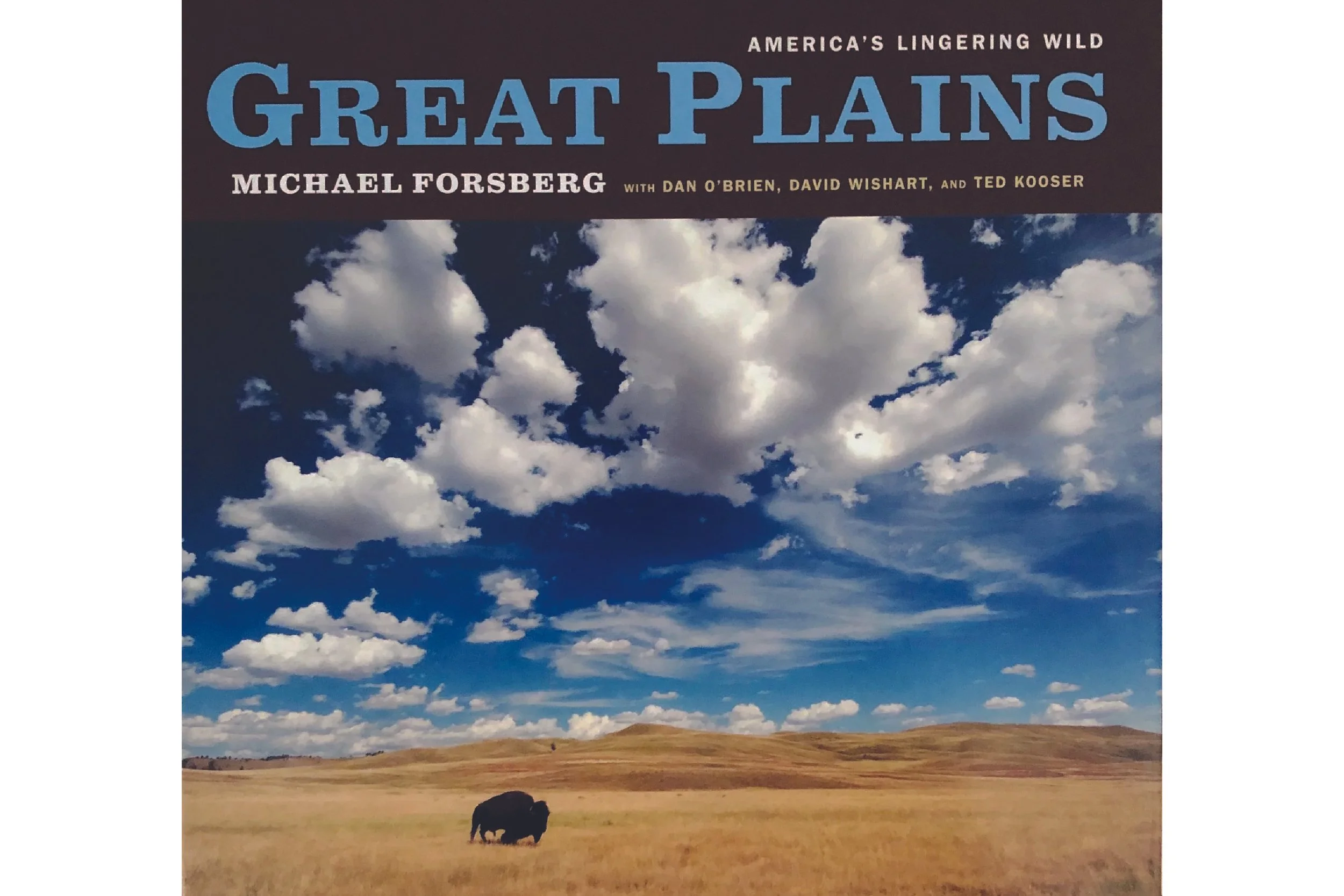 Image 1 of 1